Protect your finances. Part 2: When malware freezes financial liquidity… Let’s check the types of malicious software


Modern cyberattacks have long ceased to be the exclusive domain of IT departments. Today, they pose a direct threat to the company budget, supply chains, reputation, and B2B relations. When hackers block access to systems or impersonate trusted contractors, they strike at the sensitive point of every business – cash flow. In the second part of our series, we look at the most dangerous attack mechanisms and types of malicious software, and we advise on how to better secure your company’s money online.
Key takeaways:
- A blocked system means blocked payments. Ransomware and malware attacks can make it impossible to issue invoices and fulfill orders, which directly impacts the company’s financial liquidity.
- Accounting in the crosshairs. Frauds based on social engineering (vishing, spoofing) often aim to extort payments into fake bank accounts.
- Prevention protects capital. Implementing the Zero Trust model, regular backups, and two-step verification are the foundations without which even the best financial instruments will not ensure full security for the company.
Criminals know that the weakest link is rarely the IT system – usually, it is… a human. By manipulating administrative and financial employees, hackers can redirect corporate financial streams to their own accounts.
Smishing and Vishing. Why do you need to be vigilant?
First, let’s take a look at forms of fraud based on SMS messages (smishing) and telephone calls (vishing). In both cases, the attacker’s main intention is to mislead the employee into providing confidential data, authorization codes, or initiating an urgent transfer. To this end, fraudsters often impersonate financial operators or banks.
How to protect yourself:
- Verify the sender and the caller’s identity. Do not open links in SMS messages from unknown numbers. If you have doubts during a phone call, ask for the company’s details, hang up, and call the official number of the institution.
- Protect sensitive data. Never share your passwords, account numbers, PIN codes, tax identification number (NIP), or card security codes over the phone or SMS.
- Turn on account transaction notifications. Constant monitoring of expenses allows you to instantly detect unauthorized access and protect financial liquidity from fraudsters.
Spoofing and Typosquatting. What to look out for?
Spoofing is a technique that is also based on identity theft. An email from a regular supplier requesting a change in the billing account number, which appears authentic, may actually come from a hacker. Typosquatting, on the other hand, relies on typos in website addresses (e.g., trusted-supplier.com.pl instead of trusted-supplier.com), directing to fake pages that intercept login credentials.
How to protect yourself:
- Meticulously analyze addresses and links. Pay special attention to typos and minor differences in email addresses and website domains. Before entering data, make sure the website has a secure “https” protocol (ending in S) and a properly configured SSL certificate.
- Use technological support. Use advanced anti-spam filters in your company email. It is also worth using the auto-complete feature in your browser, which significantly reduces the risk of typing an incorrect, fake address.
Limit the public visibility of data. Do not unnecessarily share your private and operational data on the internet, to make it harder for criminals to manipulate and personalize attacks.

Operational paralysis that stops invoicing
The second category of threats includes exceptionally severe forms of attack that directly hit the IT infrastructure. When servers and production lines come to a halt, in extreme cases, a company can lose its ability to function and generate revenue, while fixed costs (payroll, taxes, leases) remain.
Ransomware and Malware. What is this malicious software?
Malware is a broad term for various types of data-stealing software. Its most destructive form for business is ransomware – various applications that encrypt corporate drives and accounting systems, demanding a ransom to unlock them. For many companies, a lack of access to the ERP system means an inability to invoice and a freeze on financial liquidity.
How to protect yourself:
- Ensure secure backups. Regularly back up your most important files and store them in the cloud or on drives not permanently connected to the internet (so-called cold storage).
- Apply the Zero Trust model and manage permissions. Implement security procedures step by step. Limit access permissions to key folders – only those users who really need it should have it.
- Update systems and software. Maintain the latest version of the operating system, antivirus program, and anti-malware applications to effectively monitor suspicious and malicious software in real time and eliminate vulnerabilities that cybercriminals could exploit.
DDoS attacks. What are they?
The main goal of DDoS attacks is to overload the company’s servers with a massive amount of artificially generated traffic in a short period. Although such maneuvers rarely steal data, they can effectively take down businesses operating primarily online, such as e-commerce stores, B2B portals, or ordering platforms, immediately cutting them off from current cash inflows.
How to protect yourself:
- Implement advanced network firewalls. A properly configured firewall can detect patterns typical of DDoS attacks and block suspicious traffic before it overloads the main server.
- Systematically monitor network traffic. Maintain a constant and systematic surveillance system over the traffic within your network to react instantly to any deviations from the norm.
- Keep applications updated. Ensure that corporate software is properly configured, updated, and ready to handle potential overloads as best as possible.
Silent resource eaters and new technologies
Some attacks are not visible at first glance, but they slowly generate financial losses or entangle the enterprise in serious legal problems, threatening, for example, the blocking of accounts by law enforcement agencies.
Cryptojacking and SIM Swapping. Where does the danger lie?
Cryptojacking is the hijacking of corporate computers’ computing power to “mine” cryptocurrencies for the hacker. This results in a drastic drop in hardware performance and higher electricity bills. SIM Swapping, in turn, is the theft of a phone number by making a duplicate SIM card, which allows criminals to intercept authorization codes for banking.
How to protect yourself:
- Secure numbers and SIM cards. Configure social media so that employees’ numbers are not publicly visible. Also, remember to set PIN codes directly on the SIM cards.
- Manage browser settings. If possible, disable Javascript scripts or use modes that restrict their operation. Revoke permissions for suspicious content from pop-up windows and disable their autoplay.
- Monitor computer system resources. If you notice that office devices suddenly start to slow down significantly, use tools that monitor component load – this could be a symptom of unauthorized cryptocurrency “mining”.
Money Muling and AI attacks. Do not be fooled!
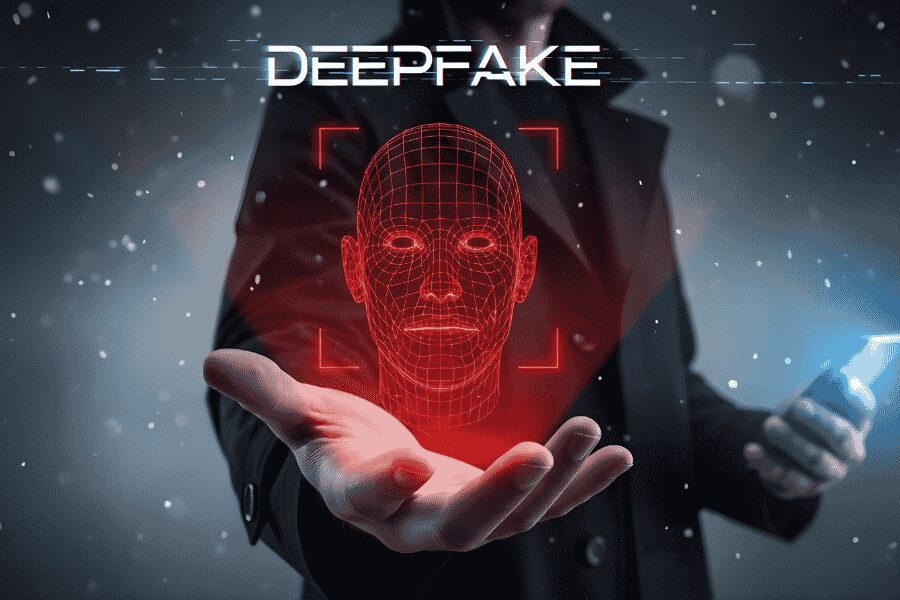
Money Muling is a process in which companies (or their employees) are unknowingly used to launder money by receiving and passing on suspicious transfers under the guise of fake transactions. In turn, the development of artificial intelligence allows hackers to create perfect deepfake campaigns, e.g., in the form of fake voice instructions from an alleged CEO or contractor.
How to protect yourself:
- Avoid suspicious “opportunities” to earn money. Beware of offers for quick and easy cash, avoid suspicious job advertisements from the internet, and do detailed research on the company. Under no circumstances should you agree to transfer money on behalf of third parties.
- Implement multi-factor authentication (MFA). Protecting key systems with multi-step logins reduces the risk of successful AI-supported attacks.
- Verify the authenticity of instructions and materials. If you are dealing with unusual video or audio materials, use platforms for analyzing and detecting malicious manipulative content. Always confirm information through fact-checking services.
From a cyberattack to a payment bottleneck
From the perspective of a financial director or company owner, a digital security incident is not just a “computer failure”. It is a situation in which real funds disappear from the account, or the company loses its operational capability. Although instruments such as factoring allow releasing receivables from properly issued invoices, it is also in your interest – and perhaps primarily – to secure the company against issuing a document for a fictitious service or transferring funds to fraudsters. Cybersecurity and the financial stability of a company must be treated as a system of connected vessels.
Frequently Asked Questions (FAQ) about types of malicious software
How do ransomware attacks affect a company's financial liquidity?
A ransomware attack encrypts key data, including ERP and accounting systems. This makes it impossible to process orders, invoice customers, and collect receivables. This results in a sudden interruption of the cash conversion cycle and leads to immediate payment bottlenecks on the part of the attacked company.
How does standard financial fraud differ from spoofing attacks in B2B?
Classic frauds often involve direct theft. Spoofing, on the other hand, is precise manipulation in B2B relations – the criminal impersonates a regular supplier and asks for payment of an authentic invoice to a new, fake account number. The company loses funds, and its real debt to the contractor still remains unpaid.
Does factoring protect against cyber threats?
Factoring directly secures financial liquidity by releasing receivables from invoices with deferred payment terms, which provides a safety buffer in the event of sales downtime. However, it will not replace antivirus systems or Zero Trust procedures. The stability of the company requires synergy of actions: tight digital protection (preventing leaks) and smart receivables management (e.g., through factoring).