
From “the accountant is on vacation” to a complete lack of response. How factoring for businesses eliminates payment bottlenecks and enables improved financial liquidity?


Payment bottlenecks! At this phrase, many entrepreneurs get goosebumps. Although according to Alfred Hitchcock, a film should start with an earthquake, the real problems of many companies begin quite inconspicuously. A single invoice unpaid on time rarely brings a business to its knees right away. Real trouble arises when such delays start to multiply, creating a dangerous domino effect. How can you recognize potential arrears early enough and how should you deal with them?
Key findings:
- Payment bottlenecks are a process that builds up gradually. Ignoring “minor delays”, a contractor avoiding contact, or sudden requests to extend payment terms is the most common mistake leading to a loss of liquidity.
- The accumulation of payments after the holiday period and the need to stock up before Q4 make September one of the most difficult months for company cash flow.
- Non-recourse factoring effectively cuts the company off from debtors’ problems. Converting receivables into cash right after issuing an invoice guarantees funds for current operational activities.
A holiday reset, and then... a harsh collision with reality
The end of the holidays is a specific time in the calendar. On one hand, companies have to settle accumulated obligations from the summer months, when turnover in many industries naturally slowed down. On the other hand, September is the last call to purchase raw materials and supplies necessary to fulfill orders for the fourth quarter, which is the peak harvest period for e-commerce, logistics, or packaging production. Unfortunately, this is exactly the moment when cash flow problems are most often exposed.
– When raw material suppliers demand prepayments ‘right now’, and your buyers ask for 60-day terms on invoices, the company falls into a dangerous payment gap – explains Leopold Kasjaniuk, General Manager at Ifis Finance. – It is precisely in such moments that payment bottlenecks can turn a thriving business into a hostage of its own success. The company has excellent results on paper, but lacks the cash to pay employees or ZUS (Social Insurance Institution) – he adds.
Payment bottlenecks: what is the real scale of the problem?
According to the latest “SME Scanner” study by BIG InfoMonitor, as many as 87% of surveyed companies admit that their B2B clients pay late, while every fifth entrepreneur is most afraid of delays in the payment of receivables resulting from issued invoices. This phenomenon, colloquially referred to as crediting contractors out of one’s own pocket, has firmly inscribed itself in the gloomy landscape of domestic business.
The problem is that small and medium-sized businesses often downplay the first symptoms. Entrepreneurs tell themselves that “the client was on vacation”, “the accountant got sick”, or “the transfer has already been sent, it just got stuck in the system”. Meanwhile, it is precisely from such prosaic excuses that payment bottlenecks are born, which can block a company’s growth for many weeks if not months, and in extreme cases, lead to its insolvency.
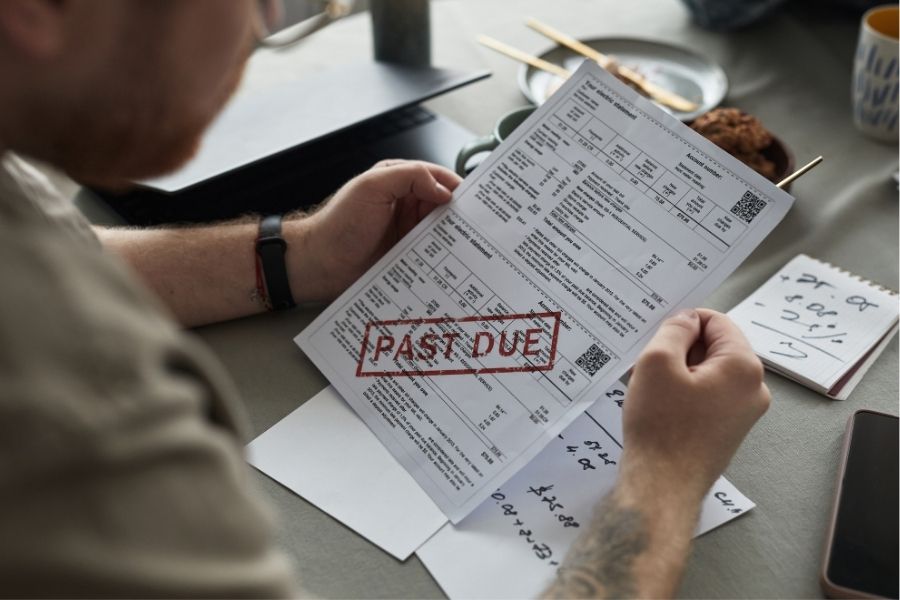
Payment bottlenecks do not come out of nowhere. Here are 4 warning signs worth remembering
For improving financial liquidity to be possible at all, you need to know when the red light comes on. Our years of experience in financing Polish business show that insolvency rarely comes out of the blue. The most common warning signs include:
- Systematic delays that become the “new normal”: if your regular client, who until now paid within 30 days, starts regularly dragging out the payment to 40, and then 50 days, it is a sign that they are struggling with reduced liquidity themselves.
- Sudden requests for an extension of the deadline or payment in installments: a change in the terms of the contract or agreement just before the invoice due date is a clear alarm signal.
- A change in communication patterns: the phone is silent, emails remain unanswered, and contact with the contractor’s financial department suddenly becomes practically impossible.
- Excuses like “we are waiting for a transfer from our client”: this is a classic example of the domino effect. It means that the liquidity of your business has just become dependent on the solvency of a third party you don’t even know.
Improving financial liquidity in practice, or how does factoring work?
The cure for the asymmetry between quick costs and deferred income does not have to be another bank loan, which will burden your balance sheet and require hard collateral. A tool that strikes at the very heart of the problem is factoring for businesses.
The mechanism is simple and effective:
- You issue your client an invoice for a completed delivery or service with a deferred payment date (e.g., 30 or 60 days).
- Instead of nervously waiting for the transfer and wondering if the contractor will keep their word, you hand the document over to us – your factor.
- Ifis Finance verifies the invoice and pays you an advance (most often amounting to 80-90% of its gross value).
- You invest the cash in goods for Q4, pay salaries, and cover operational costs, while we patiently wait for your contractor to pay the invoice on time.
Thanks to this, you regain control over your company budget. What’s more, at Ifis Finance we also take on the obligation of monitoring the inflow of receivables (so-called soft collection). We relieve your accounting department, allowing you to focus on making money, rather than begging for it.

And what if the proverbial "minor delay" turns into a complete lack of payment?
This is where a “harder”, uncompromising tool in the fight against payment bottlenecks comes into play – non-recourse (full) factoring. This is a solution that guarantees absolute peace of mind, in which Ifis Finance takes on 100% of the risk of non-payment from the contractor. If your buyer goes bankrupt, enters a restructuring process, or falls into chronic default, the advance paid to you remains fully secure. The funds are definitively yours, and we bear the entire burden of potential losses and tedious debt collection. It is a financial shield that ensures your debtors’ problems will never become your problems again.
Factoring for businesses with a human face – why Ifis Finance?
In the financial market, it is not difficult to find a partner guided by cold algorithms and dry scoring procedures, usually managed by artificial intelligence. At Ifis Finance, however, we believe that successful business is based on stable, human relationships. Choosing our support means improving financial liquidity while maintaining full flexibility and complete understanding of the challenges faced by the company and the entire industry.
– We do not apply rigid penalties for terminating the contract or fees for not utilizing the full turnover limit. We know the specifics of the Polish market, the volatility of business cycles, and seasonality perfectly well. Instead of forcing you to establish a mortgage or a pledge on the company’s assets, we rely on soft collateral: assignment of receivables from the invoice and a promissory note – emphasizes Leopold Kasjaniuk. – With us, you are not a hotline client – you work with a dedicated advisor who will help you implement factoring in your company smoothly and without a revolution in accounting – he summarizes.
Frequently asked questions (FAQ) about payment bottlenecks and factoring for businesses
When does a minor payment delay practically become a payment bottleneck?
We speak of a bottleneck when payment delays from your buyers become systematic and begin to directly affect your ability to settle your own liabilities on time (towards offices, employees, or suppliers). Payment bottlenecks create a domino effect that can very quickly lead to a loss of liquidity, even if the company generates high profits “on paper”.
Will factoring for businesses protect me if the contractor ultimately does not pay?
Yes, if you opt for full factoring (non-recourse). In this variant, we – as the financing institution – take on the risk of non-payment by your contractor. If the debtor, for example, declares bankruptcy, the funds paid to you in the form of an advance remain safe in your account.
How quickly can financing be activated to experience an improvement in financial liquidity?
The implementation process at Ifis Finance is maximally simplified and free of bureaucracy. The decision to grant a limit is usually made within a few business days from the delivery of documents and the risk assessment. After signing the contract and properly assigning the receivables resulting from the invoice, the funds hit your current account (without the need to change your account) usually within 24 hours.