
The retail chain dictates tough terms, and suppliers expect money “ASAP”. How to make ends meet? FMCG factoring in practice


September is a time of intensive preparation for autumn-winter sales peaks for food producers and FMCG sector companies. Signing a long-term contract with a large retail chain is undoubtedly a reason for an entrepreneur to rejoice and secures a large volume, although sometimes it is also the beginning of… liquidity challenges. Retail market giants usually impose long invoice terms, and widespread payment bottlenecks are a sad daily reality of the market. On the other side of the supply chain stand employees, farmers, packaging producers, or transport companies to whom the company has its own liabilities. How to effectively manage liquidity when pressure comes from both sides? The answer to this market challenge can be professional factoring for FMCG companies.
Key takeaways:
- Cooperation with strong retail chains and discounters often means having to freeze the company’s working capital for up to several months, which in an era of rising operational costs is quite a burden for food suppliers and producers.
- FMCG factoring eliminates the risk of payment bottlenecks from clients, providing the funds necessary to pay taxes, salaries, and fixed costs practically on the spot.
- Thanks to support from the Supplier Financing Program, a company can settle its own liabilities to farmers or raw material suppliers on time, while negotiating favorable discounts.
A contract with a retail chain: a golden deal or... a golden cage?
The FMCG industry, particularly food production and processing, is currently in a difficult position. On the one hand, geopolitical tensions, e.g., in the Middle East, directly hit the raw materials market, inevitably driving up production costs. Added to this is increasingly expensive logistics – fueled by higher fuel prices and difficulties on key shipping routes. The picture is completed by rising labor costs. The August salary report in the industrial sector by Grafton Recruitment Poland exposes a deficit of qualified specialists in the FMCG sector, from automation engineers to quality engineers and technologists. The need to retain workers at production lines exerts strong wage pressure.
On the other side of the supply chain stand powerful buyers, creating an obvious asymmetry of power. A brutal price war is taking place on the Polish market, in which the main roles are played by the largest discounters, such as Lidl and Biedronka, which already control nearly 44% of the domestic FMCG market combined. To maintain the image of the “cheapest store” and fight for market share without their own losses, chains pressure suppliers to finance promotions, effectively cutting their own margins. Furthermore, chains hold a strong bargaining chip in negotiations – private labels. According to The State of Grocery Retail Europe 2026 report, retailers, not producers, are now responsible for about 70% of food innovations in Europe.
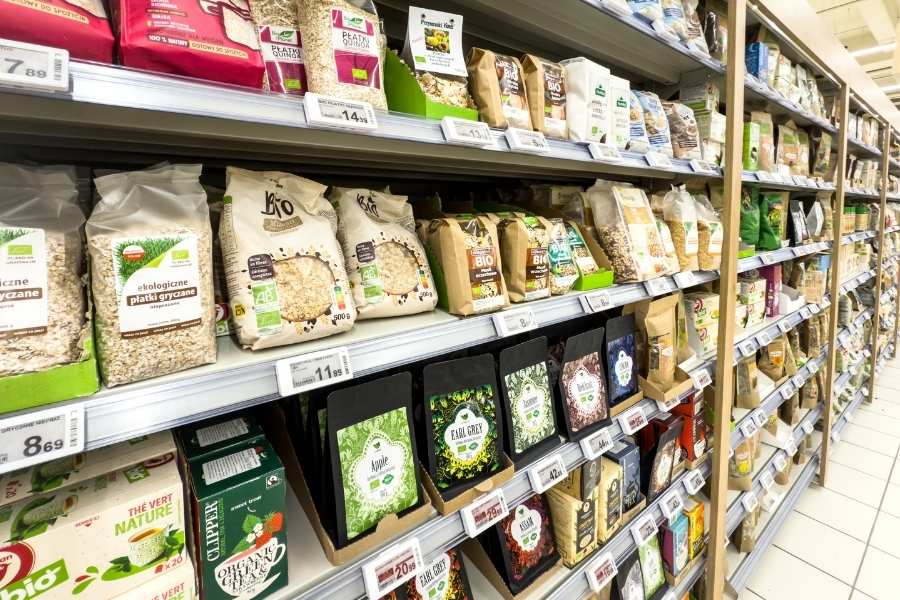
Payment bottlenecks in the food industry – a dangerous domino effect
In such realities, when a medium-sized meat plant, dairy, or sweets producer establishes cooperation with a nationwide retail chain, it must accept the imposed rules of the game upfront. One of the most important is deferred payment terms. For a large retail player, it is an effective way to optimize their own capital. For the producer, however, it means that although they delivered goods to the shelves in September, real payment will only feed their company account in November or December.
Meanwhile, plant workers, farmers supplying milk or meat, as well as pallet producers, label printers, or forwarding companies transporting goods in refrigerated conditions, cannot wait a quarter for payment. Thus, a clear liquidity gap arises, in which the producer is de facto forced to credit the powerful retail chain out of their own pocket. In turn, this state of affairs is the direct cause of payment bottlenecks, which, like dominoes, hit the producers’ creditors located at the end of the entire “digestive system”. According to data from BIG InfoMonitor and the BIK database, food production currently records an infamous, highest level of arrears – unpaid liabilities reach approx. PLN 1.5 billion and have increased by over PLN 151 million (11.1%) annually.
FMCG Factoring: regain control over your own capital
Attempting to independently “bridge” this financial straddle often ends in halting investments, delays in paying ZUS (social security), or, in extreme cases, a loss of liquidity and bankruptcy. A solution that systematically cuts this Gordian knot is properly structured factoring for FMCG companies.
The mechanism of this tool in its basic version fits perfectly into the dynamics of deliveries to retail chains:
- The company produces and delivers goods to the retail chain’s distribution center, then issues an invoice with a 60- or 90-day payment term.
- Instead of passively waiting for the transfer, the producer forwards the document for financing to their factor (under a confirmed assignment of receivables).
- The factor verifies the invoice and within 24 hours transfers an advance payment (amounting to 90-100% of the document’s value) to the producer’s account.
- After the due date passes, the retail chain pays the invoice directly to the factor’s account, thereby closing the transaction.
In this simple way, funds that would be frozen for a whole quarter almost immediately return to the company’s “bloodstream”, allowing it to freely prepare further batches of goods for the approaching peak season – without worrying about payment bottlenecks and problems settling its own liabilities. And speaking of which…
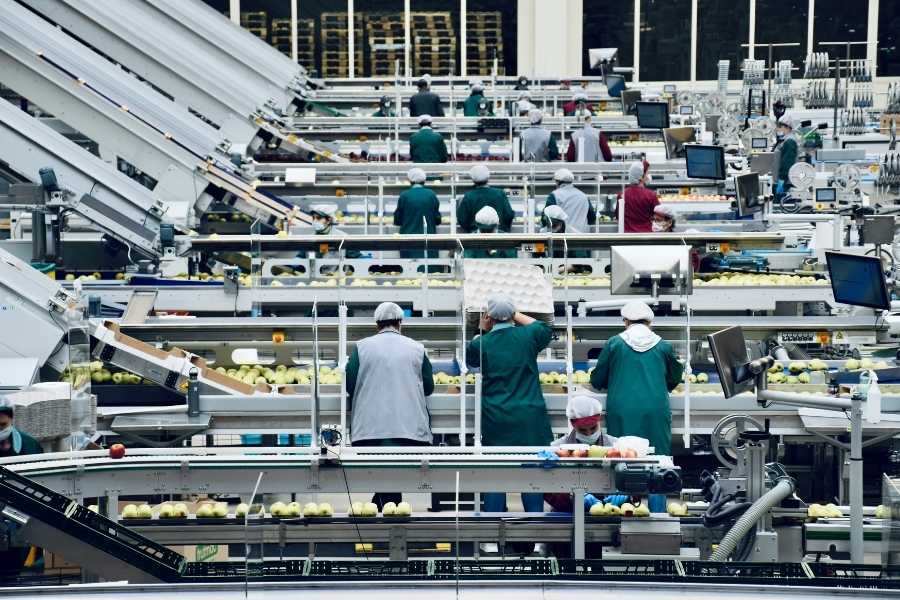
What about your own liabilities? Discover the Ifis Finance Supplier Financing Program!
Freeing up funds from your own sales is the first half of success. The second relies on efficiently managing liabilities towards farmers and suppliers of raw materials and semi-finished products that you need to manufacture your goods. Standardly, you settle these bills after 30 days, although the prospect of faster settlement of receivables in exchange for a discount (early payment discount) can be tempting. The savings are real, although, on the other hand, they require engaging your own working capital, which can disrupt liquidity.
Instead of engaging your own capital, you can use the Ifis Finance Supplier Financing Program. How does it work in practice? We – relying on the stable financial background of the Banca Ifis group – pay your contractors’ invoices right away. You, in turn, gain a strong argument to negotiate an attractive discount for early payment with them. Instead of standard fees, in this case, we propose an innovative and simple model of sharing the profit from the discount.
– For example: in exchange for faster payment, you negotiated a 2% discount with the supplier. We divide this generated profit on transparent terms, half and half. A portion of the discount thus covers the financing cost, and the other part goes straight into your pocket as pure savings. In this way, you become a reliable client for farmers and packaging suppliers who pays on time, and all this happens without engaging your financial surpluses. You can immediately allocate the saved funds to current operations, such as paying the salaries of key engineers – explains Leopold Kasjaniuk, General Manager at Ifis Finance.
A financial partner who understands the appetite for growth
When looking for support for your company, it is worth betting on a partner who looks at your business holistically. At Ifis Finance, we perfectly understand the specifics of the Polish food market. Our factoring for FMCG companies is not based on rigid banking algorithms. We make decisions based on a solid analysis of your relations with recipients.
– As part of the Banca Ifis capital group, we offer entrepreneurs the highest transaction security while maintaining a boutique approach. With us, the client has an assigned, dedicated account manager and a transparent contract with no hidden fee tables – emphasizes Leopold Kasjaniuk. – By combining standard receivables financing with the Supplier Financing Program, we create a protective shield for producers against payment bottlenecks. This allows them to confidently sit down to negotiations with the largest retail chains, without fear about company liquidity – he concludes.
Frequently asked questions (FAQ) about FMCG factoring
For which food industry companies is factoring most profitable?
It is an ideal solution for medium and larger processing plants (meat, dairy, fruit and vegetable), as well as sweets or beverage producers who cooperate with large discounters, supermarkets, and distribution centers, struggling with payment terms deferred by dozens of days.
Does the retail chain have to consent to the assignment of receivables for you to use factoring?
Fundamentally yes, in the classic model of disclosed factoring, the debtor (retail chain) is informed about the transfer of receivables. It is true that many contracts with retail chains contain clauses about a strict ban on assignment (which under normal conditions makes it ineffective), however, as a supplier, it is worth knowing your rights. According to the Act on Counteracting Excessive Delays in Commercial Transactions, a contractual ban on the assignment of a pecuniary receivable becomes legally ineffective if three conditions are met cumulatively: the payment term on the invoice exceeds 60 days, the debtor is a large enterprise (e.g., a retail chain), and the creditor is an SME sector company and the invoice is not paid on time. This is a kind of legal shield that enables smaller suppliers free access to external financing.
How does the Supplier Financing Program work in practice and who benefits from it?
When your contractor (e.g., a farmer supplying raw materials or a packaging producer) issues an invoice, Ifis Finance pays it almost immediately. Because the supplier receives cash on the spot, you gain an argument to negotiate a discount (so-called early payment discount). You, in turn, settle with us only after the standard or even extended payment term has passed. A portion of the profit generated in this way from the discount covers the cost of our service, and the remaining amount is your savings.